Avi Loeb | NASA hides 3I/ATLAS alien tech?
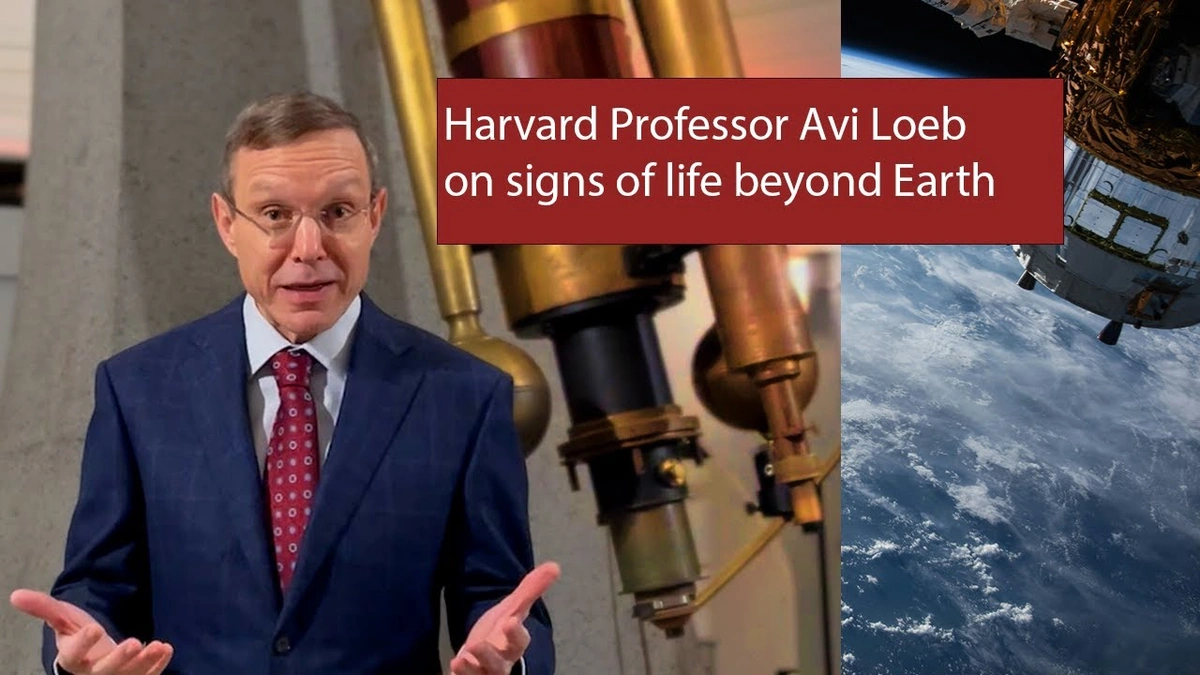
Okay, let’s dive into something truly mind-bending. We’re talking about 3I/ATLAS, an object that’s been whipping around our solar system and stirring up more controversy than a Bollywood plot twist. And at the center of it all? None other than Avi Loeb , the Harvard professor who isn’t afraid to ask the big questions – even if they ruffle a few feathers in the scientific community. The question is, do the recent NASA images finally resolve the debate about its nature?
Here’s the thing: normally, when NASA releases images, especially detailed ones, it’s kind of like the final word, right? Case closed. But in this instance, it seems like we’re just getting started. Buckle up; we are going to explore the deep implications of that.
Why This Matters | More Than Just a Space Rock
Why should you, sitting in India, care about some space rock zipping past Earth? Because it touches on something fundamental: our place in the universe. Interstellar objects like 3I/ATLAS are messengers from other star systems. They are hints of what might be out there. The reason that rmcluniverse.com is so fascinated by space is because it is in our nature to discover our origin. What fascinates me is that every finding about space is a finding about ourselves.
The ongoing debate about whether it’s just a weirdly shaped asteroid or – and this is where Loeb’s perspective gets interesting – potentially something artificial, forces us to confront the possibility that we are not alone. And let’s be honest, the implications of that would be massive, affecting everything from our technology to our philosophy.
The Case for the Unusual | Avi Loeb’s Perspective
Avi Loeb , as you probably know, isn’t your typical astronomer. He’s known for his willingness to entertain unconventional ideas, most famously his suggestion that ‘Oumuamua, the first interstellar object detected, might have been alien technology. This perspective, of course, has made him a target for criticism, but also a source of fascination for many.
Loeb argues that 3I/ATLAS exhibits characteristics that are, well, a little odd. Its trajectory and brightness variations don’t perfectly align with what we’d expect from a regular comet or asteroid. This is where the debate heats up. Are these anomalies just natural phenomena that we don’t fully understand yet, or could they be signs of something more…constructed? It’s this line of questioning that keeps him, and us, intrigued.
NASA’s Images | Clarity or Confusion?
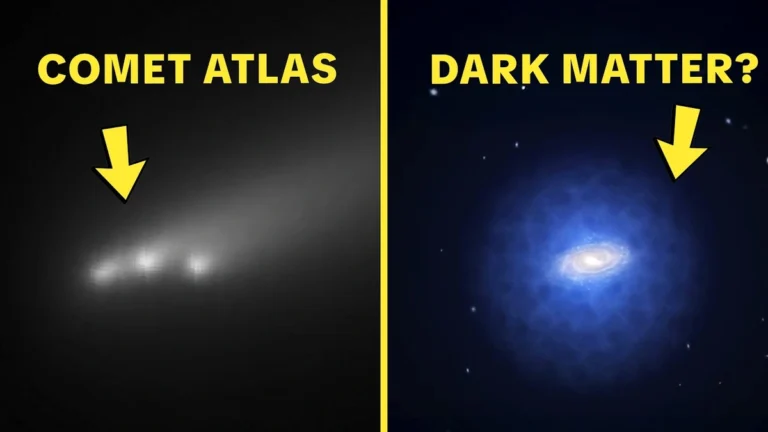
So, what do these new NASA images actually show? High-resolution details, obviously. But here’s the catch: While the images provide a clearer view of 3I/ATLAS’s shape and surface features, they haven’t definitively settled the debate. Some scientists interpret the data as supporting the idea that it’s a natural object, perhaps a fragment from a larger body. Others, likely including Loeb, might argue that the anomalies remain unexplained, leaving the door open for more exotic possibilities. It is important to analyse interstellar object composition to infer its origin.
And that’s the beauty of science, isn’t it? It’s not about having all the answers, but about constantly questioning and refining our understanding of the universe. Sometimes the better images lead to more questions.
The Broader Implications for SETI and Space Exploration
This debate about 3I/ATLAS also highlights the importance of the search for extraterrestrial intelligence (SETI) and broader space exploration efforts. If we’re serious about finding evidence of life beyond Earth, we need to be open to all possibilities, even the ones that seem far-fetched. A closed mind finds nothing. If you think about that, 3I/ATLAS origin is something that we need to question.
That’s not to say we should jump to conclusions, but rather that we should approach these investigations with a healthy dose of skepticism and a willingness to challenge our assumptions. After all, the universe is a vast and mysterious place, and we’ve only just begun to scratch the surface of understanding it.
The discovery of interstellar visitors is always interesting. rmcluniverse.com wants you to keep a curious mind. This is why we love space!
The Indian Perspective | A Cosmic Connection
From an Indian perspective, this debate about 3I/ATLAS resonates with our ancient traditions of exploring the cosmos and pondering our place within it. Indian philosophy has long emphasized the interconnectedness of all things and the possibility of life existing in many forms throughout the universe. Whether you call it Advaita Vedanta or string theory, the universe is connected.
So, as we follow this scientific debate, let’s also reflect on the deeper questions it raises about our existence and our relationship to the cosmos. It is important to encourage interstellar object research around the world. It could be that our ancestors arrived on one.
FAQ Section
Frequently Asked Questions
What exactly is 3I/ATLAS?
3I/ATLAS is an interstellar object, meaning it originated from outside our solar system. It was discovered by the ATLAS survey in 2019.
Why is Avi Loeb so interested in it?
Avi Loeb is intrigued by 3I/ATLAS because it exhibits some unusual characteristics that don’t perfectly align with typical asteroids or comets. This makes him wonder if it could potentially be something artificial.
Have NASA’s images settled the debate?
Not entirely. While the images provide more detailed information about 3I/ATLAS, they haven’t definitively proven whether it’s a natural or artificial object. The debate continues.
Where can I find more information about this?
You can follow Avi Loeb’s work on his website or in scientific publications. Also, keep an eye on NASA’s website for updates on interstellar object research.
Could 3I/ATLAS pose a threat to Earth?
No, 3I/ATLAS has already passed by Earth and is now moving away from our solar system. It doesn’t pose any threat to our planet.
So, what’s the takeaway? NASA’s images of 3I/ATLAS haven’t ended the discussion. They’ve only deepened the mystery. And that, my friends, is what makes science so endlessly fascinating. The truth is out there – or maybe it’s just a really weird space rock. Only time, and more investigation, will tell.
About the Author